
When summer gets hot, our pets need our help to stay safe and cool. Not every home has air conditioning or a cool basement. That's okay. There are still plenty of things you can do to protect your pets, no matter where you live.
Fresh Water: More Than Just a Full Bowl
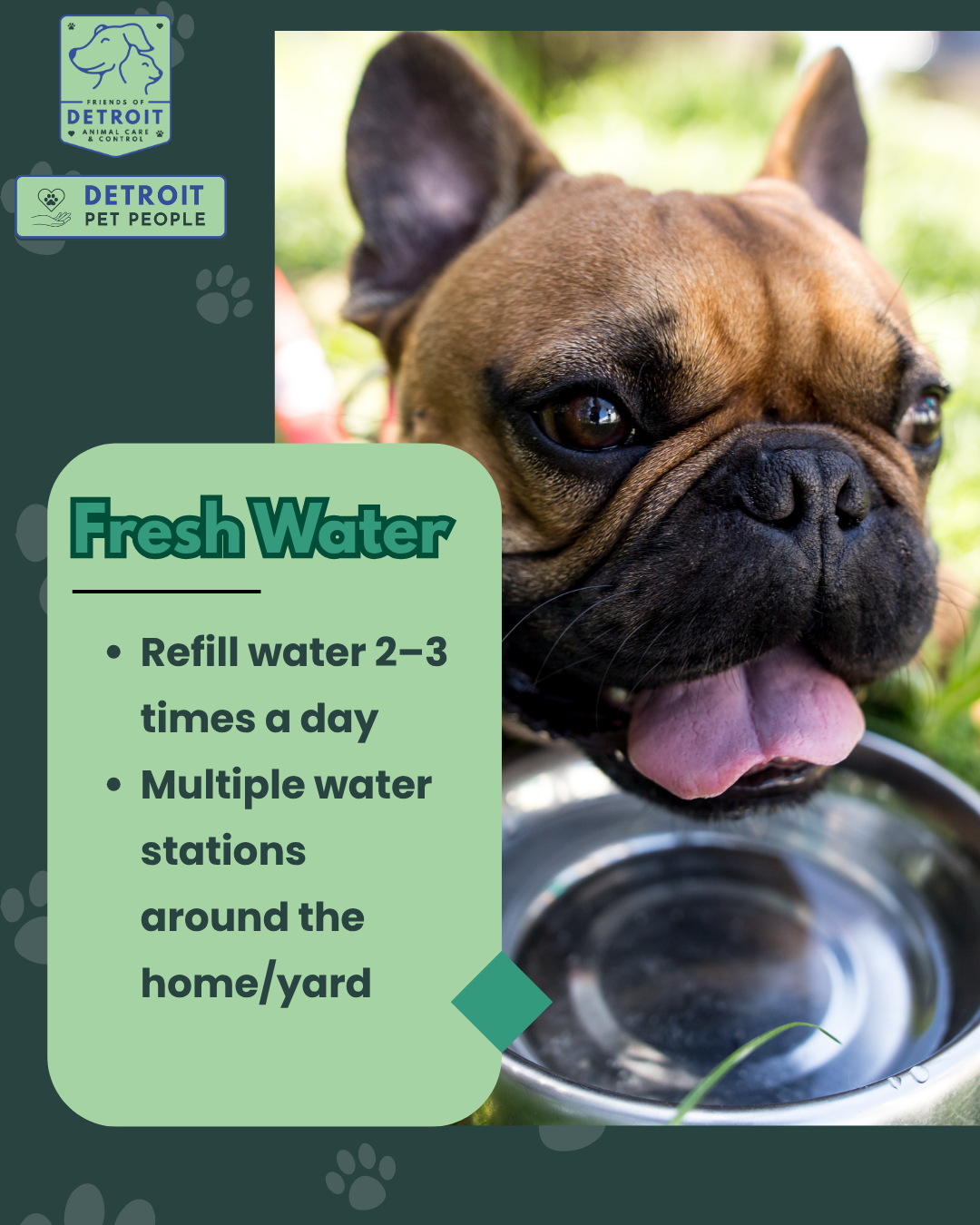
This sounds easy, but there's more to it than filling a bowl once a day. Water heats up fast in warm weather — and pets are less likely to drink warm water.
Refill water often — at least two or three times a day when it's hot.
Use ceramic or stainless steel bowls. They stay cooler longer than plastic ones.
A pet water fountain keeps water moving, which helps it stay a little cooler.
Try adding ice cubes to your dog's bowl. Many dogs love it, and it keeps the water cold longer.
Put water bowls in more than one spot around the house or yard.
Outdoor pets and farm animals need large, shaded water containers that won't tip over easily.
Pets can get dehydrated faster than you might think. Watch for signs like tiredness, dry gums, sunken eyes, or skin that doesn't bounce back when you pinch it gently.
Finding (or Making) a Cool Spot — Even Without A/C
Here's something many people don't think about: on a hot day, inside your home can actually be hotter than outside. Don't assume that being indoors means being safe. Get creative.
Indoors
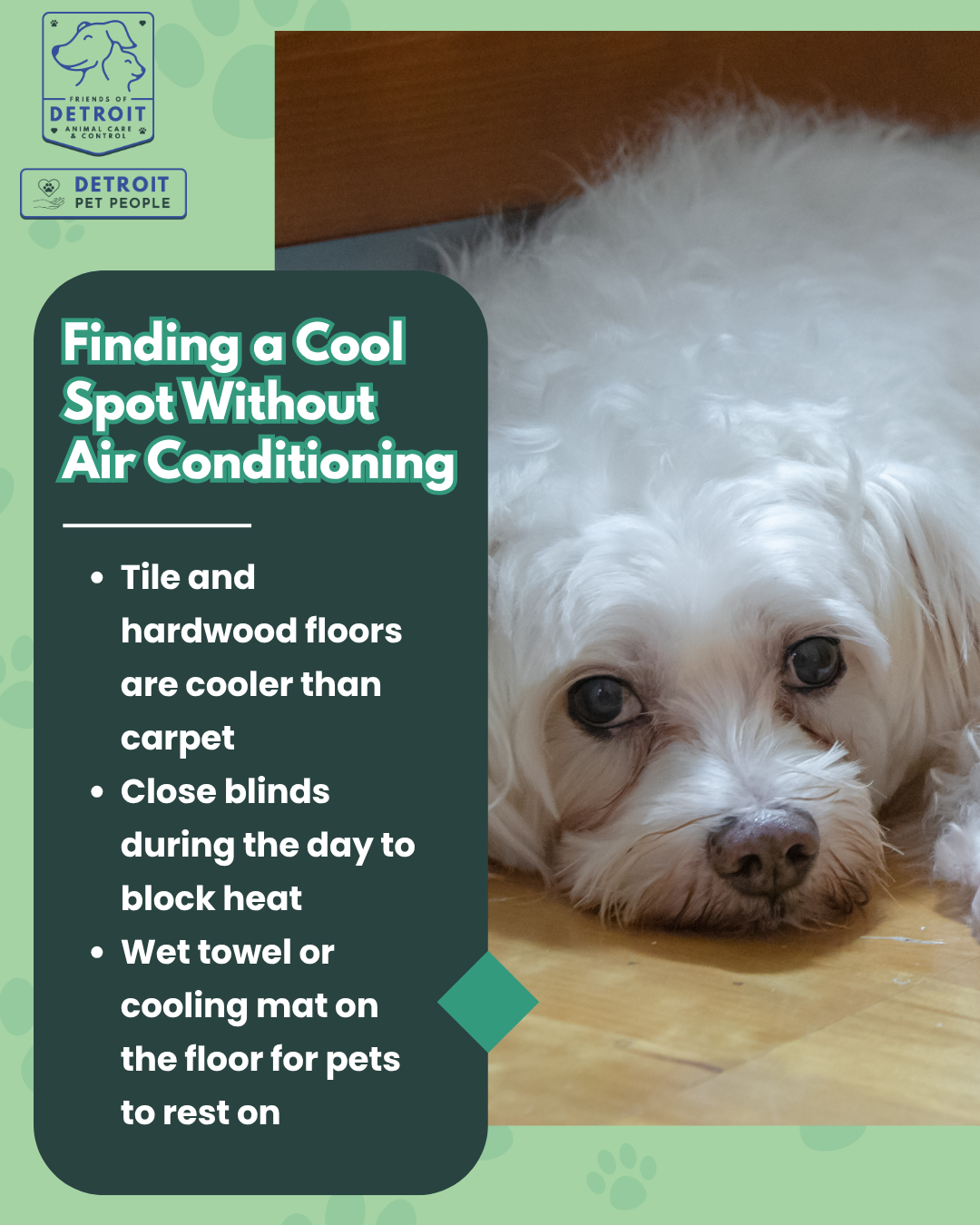
Tile and hardwood floors stay cooler than carpet. Let your pet lie on them.
Close blinds and curtains during the day to keep sunlight out and stop rooms from getting too hot.
Use box fans to move air through your home. Open windows on opposite sides of the house in the morning and evening when it's cooler outside. Close them during the hottest part of the afternoon.
A wet towel on the floor gives your pet a cool place to rest.
Cooling mats are cheap and work well. Many dogs and cats will use them on their own.
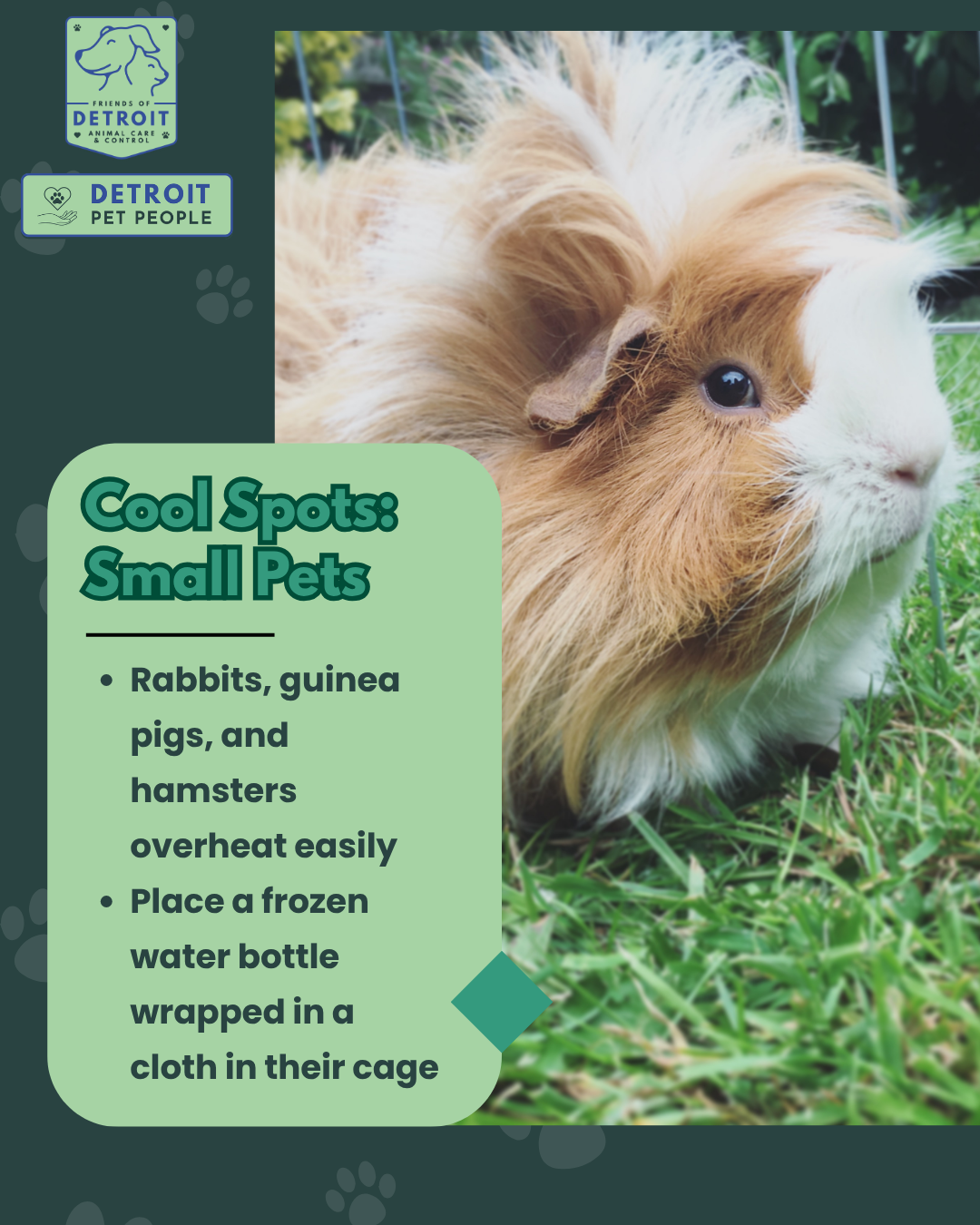
Small pets like rabbits, guinea pigs, and hamsters get overheated easily. Put a frozen water bottle wrapped in a cloth in their cage so they can press against it to cool down.
Outdoors
Shade matters more than anything. If your pet is outside, make sure they have shade all day long — not just in the morning when the sun hasn't shifted yet.
A small wading pool in the shade is great for dogs. Many will step in on their own when they get too warm.
Grass and dirt are cooler on paws than concrete or pavement. Hot pavement can burn your pet's feet quickly.
Never leave a pet in a parked car — more on that below.
When Outside Is Actually Cooler
On very hot, still days, a shaded spot outside with a light breeze can be cooler than a stuffy room inside. Check your thermometer instead of guessing. Your pet will often head toward wherever it's cooler — follow their lead.
Never Leave Pets in a Parked Car
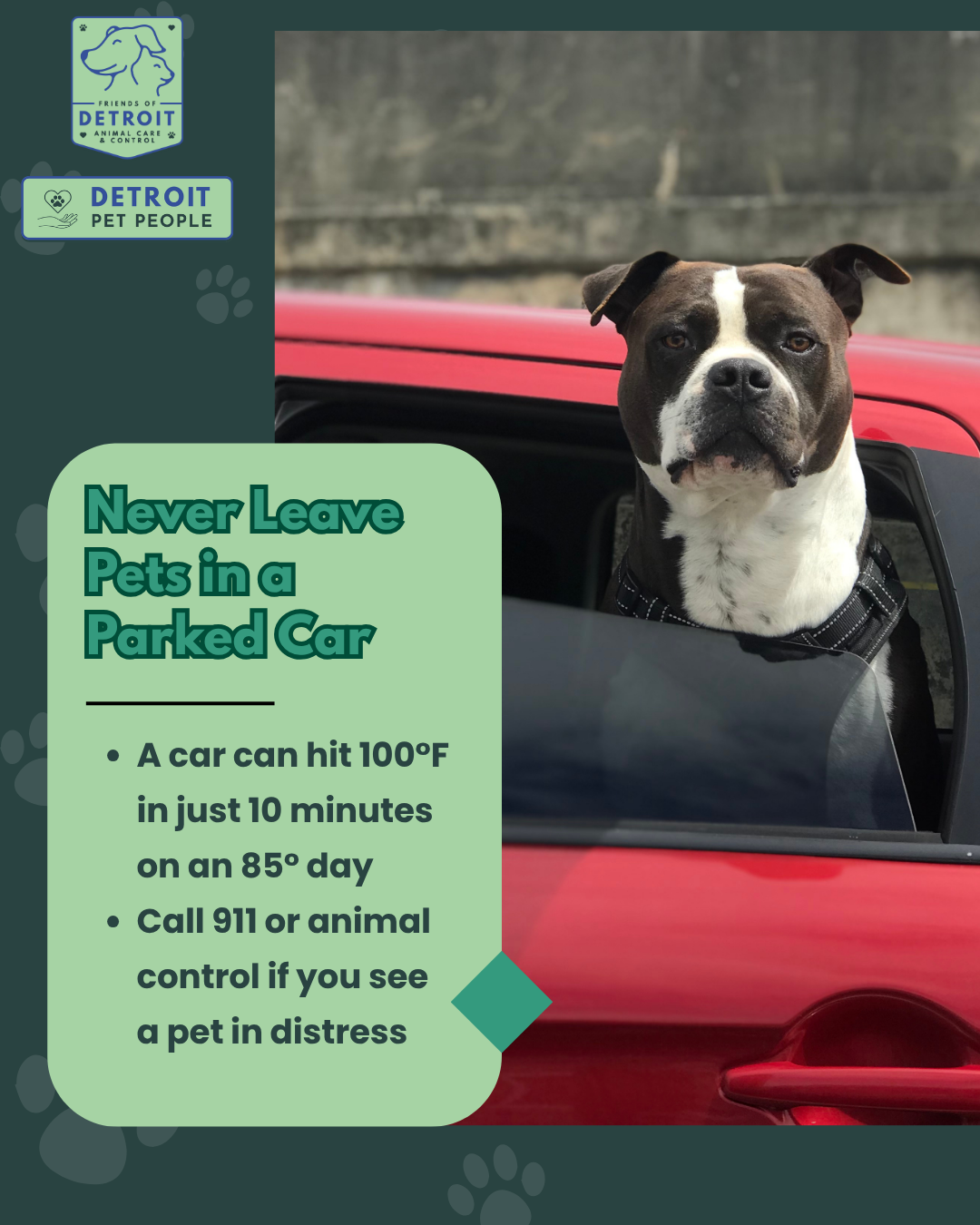
This is one of the most important things to know. A car sitting in the sun on an 85°F (29°C) day can hit over 100°F (38°C) in just ten minutes — and 120°F (49°C) in thirty. Cracking the window barely helps.
Even a cool day can be deadly. A cloudy 70°F day can still turn a car into an oven.
"I'll only be a minute" is how pets get hurt. A long line or a quick phone call is all it takes.
If you're running errands, leave your pet at home. If you're on a road trip, stop at places where someone can stay with your pet, or where pets are allowed inside.
If you see a pet trapped in a hot car and they seem to be in trouble, call local animal control or 911 right away. Many states allow people to step in to help — know the laws in your area.
Tips by Pet Type
Dogs: Take walks in the early morning or after sunset when the ground is cooler. Dogs with flat faces — like bulldogs, pugs, and French bulldogs — and older or overweight dogs overheat more quickly and need extra care.
Cats: Cats usually find cool spots on their own. Just make sure they can't get stuck in a hot room by accident. Long-haired cats might feel better with a trim in summer.
Small animals (rabbits, guinea pigs, hamsters): These pets are very sensitive to heat. They can't cool themselves down well and can die fast in high temperatures. Keep them in the coolest room in your home and use the frozen bottle trick.
Birds: Keep cages away from direct sunlight. Give them a shallow dish of water so they can splash around. Don't put cages near windows that get hot afternoon sun.
Reptiles: They need specific temperatures to stay healthy. During a heat wave, make sure the cool side of their enclosure stays at the right temperature. You may need to adjust your setup.
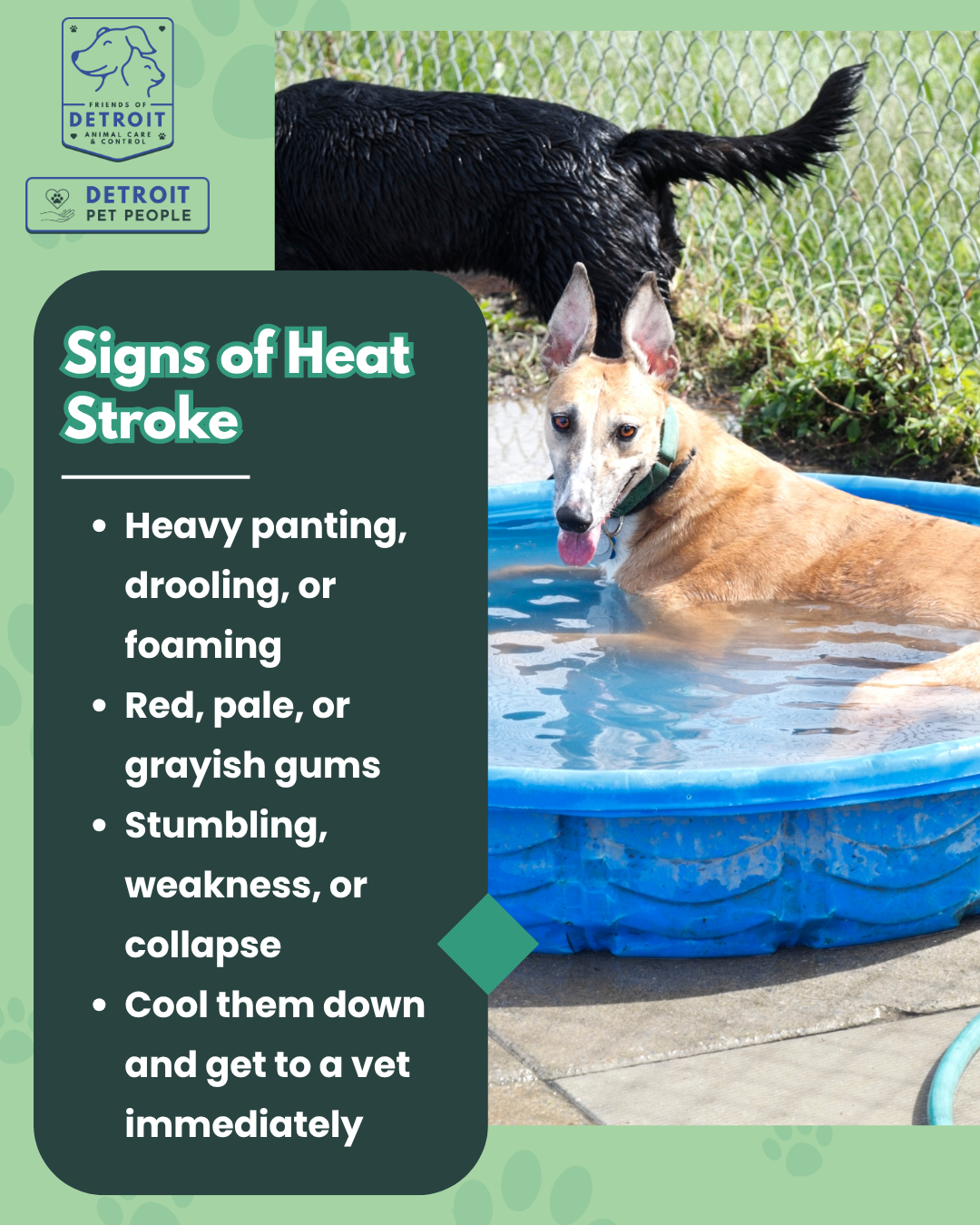
Signs of Heat Stroke
Act quickly if you see any of these:
Heavy, fast panting
Drooling or foam at the mouth
Gums that look bright red, pale, or grayish
Weakness, stumbling, or collapsing
Vomiting or diarrhea
Move your pet to a cool place right away. Put cool (not ice cold) water on their paw pads, armpits, and the back of their neck. If they're awake, let them take small sips of water. Get to a vet as fast as you can — heat stroke can damage organs in just a few minutes.
The Bottom Line
You don't need A/C to keep your pet safe in the summer. You just need a plan. Know where the coolest spots are in your home and yard. Keep water fresh and easy to reach. Avoid going out in the hottest part of the day. And never, ever leave a pet in a parked car.
Your pet is counting on you to notice when things are getting too hot. A little planning ahead can make all the difference.
